
What Are the Signs Your Irrigation System Needs Professional Repair?
In Phoenix, AZ, your irrigation system works through blazing heat, low humidity, and sudden monsoon bursts. When something goes wrong, the clues often show up in your yard and on your water bill long before a part completely fails. Knowing the warning signs helps you protect your landscape, conserve water, and avoid bigger damage. If you already notice problems, schedule prompt irrigation repair so a technician can diagnose the cause and get your system back on track. For quick help from Living Waters Landscape Irrigation and Lighting Service & Repair, call 480-526-3221.
Why Phoenix Weather Exposes Weak Spots In Irrigation Systems
Phoenix summers bring triple-digit temperatures and intense sun that can weaken plastic components, gaskets, and drip tubing. UV exposure and heat cycles cause materials to become brittle. By late afternoon, pressure in lines can rise as water expands, then drop overnight when temperatures cool. Those swings stress fittings and valves.
Monsoon season typically brings wind-driven dust and sudden downpours. Debris can clog nozzles, bury drip emitters, or shift shallow lateral lines. Hard water minerals leave scale inside emitters and sprinkler nozzles, which restricts flow and skews spray patterns. In neighborhoods like Arcadia, Desert Ridge, and Ahwatukee, soil movement and tree roots can also nudge pipes and fittings just enough to start small leaks that grow over time.
Local insight: After a major monsoon microburst, take a quick walk-through the next morning. Look for new puddles, tilted spray heads, or gravel washed over drip lines. Early attention reduces water waste and keeps plants healthy during long Phoenix heat waves.
Clear Signs Your Sprinkler System Needs Professional Attention
Many irrigation problems hide underground, but the symptoms are easy to spot if you know where to look. Call a pro when you notice any of the following:
- Sudden, unexplained spikes in your water bill compared with last month or the same time last year.
- New soggy areas, puddles, or runoff down the sidewalk after a short watering cycle.
- Dry or browning patches that persist even while other areas look overwatered.
- Misting or fogging from spray heads on calm days, which usually points to high pressure or damaged nozzles.
- Uneven spray patterns, short throw distance, or heads that do not pop up all the way.
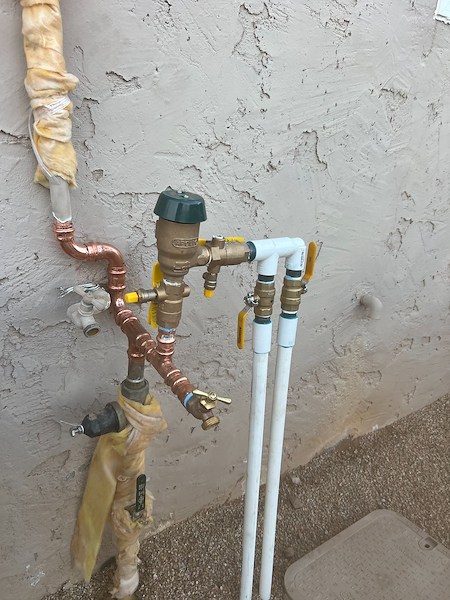
- Standing water or constant soggy spots around the backflow preventer or valve boxes.
- Controller issues like blank screens, frequent resets, or zones that will not start or shut off.
- Hissing, bubbling, or whistling near valves or the backflow assembly, especially during or just after a run cycle.
- Mulch or soil washing away near lines after storms in areas like North Phoenix or Maryvale.
- Mushrooms, algae, or consistently damp soil along a pipe run when nearby areas remain dry.
Each of these can signal leaks, stuck valves, failing diaphragms, broken laterals, clogged nozzles, or wiring faults. Addressing them promptly preserves plant health and helps ensure compliance with seasonal watering schedules common across the Valley.
What Hidden Issues Pros Find During Irrigation Leak Detection
Experienced technicians look beyond obvious symptoms. During irrigation leak detection, they may discover pinhole leaks in lateral lines that only appear under pressure, small cracks in PVC elbows hidden under turf, or root intrusion that dislodges fittings near trees. They also test zone-by-zone performance to confirm pressure and flow are within expected ranges. Mineral buildup in emitters or nozzles is common in Phoenix and often appears as reduced flow, misting, or off-target spray.
Valve boxes often tell a story. Sand or silt in a box can indicate a slow, long-term seep. A damp solenoid cap may point to a failing diaphragm. Corroded or loose low-voltage wire connections can make a zone run intermittently, which is easy to miss if your watering happens before sunrise. Pros use proven diagnostic steps to isolate the fault and choose the right repair so issues do not return.
Seasonal Timing: When To Act In Phoenix’s Climate
Timing matters in the desert. Spring checks catch problems before peak summer demand, when plants need consistent watering to survive. As temperatures climb in May and June, pressure issues and small leaks tend to show up. After July and August storms, a post-monsoon inspection identifies debris-clogged heads and shifted lines. When winter nights get chilly, keeping valves and exposed parts in good shape reduces the risk of unexpected failures during overnight cycles.
If you want a team that understands how local weather affects performance across Phoenix neighborhoods, browse the Phoenix irrigation systems page to see how repairs, upgrades, and maintenance adapt to our climate.
What To Expect During A Professional Irrigation Repair Visit
Clarity and communication are key. A reputable technician will start by asking about what you have noticed, then perform a site walk to confirm the symptoms. From there, they test each zone to observe pressure, coverage, and response at valves and the controller. You should receive clear findings and a recommended plan before any repair begins.
- System check: controller review, wiring and zone activation, and quick valve function test.
- Visual and pressure checks to pinpoint leaks, clogged nozzles, or stuck components.
- Targeted repairs with quality parts that match your system’s specifications.
- Final run and adjustments so spray patterns cover lawn and plant beds evenly.
- Simple care guidance that protects your investment without DIY work.
If you are not sure what is wrong but see warning signs, a focused troubleshooting visit for irrigation systems helps isolate issues before they escalate. Once the root cause is known, the right fix can be made quickly.
Repair Or Replace? Making The Right Call
Most Phoenix homeowners only need targeted repairs. Cracked fittings, clogged nozzles, broken risers, and worn diaphragms are common and straightforward to address. Replacement becomes a discussion when systems are very old, have repeated leaks across multiple zones, or use obsolete components that no longer deliver even coverage. A trusted pro will weigh your system's age, the number of recent failures, and the health of your landscape to recommend the most practical route. If new lines or heads are needed, upgrades can improve distribution and reduce evaporation losses in hot weather.
When repairs are right, you will see an immediate difference: consistent spray, healthier turf, and fewer dry or soggy spots. When replacement or partial retrofits make more sense, your technician will explain why and outline the steps to keep your yard watered efficiently during the transition.
Local Clues You Should Never Ignore
Phoenix lawns and plant beds often sit over compacted soil that sheds water quickly. That can hide a lateral leak because water runs sideways before it surfaces. Keep an eye on strips of turf along streets in Arcadia and Central Phoenix, where vehicles and foot traffic can tilt or break heads near curbs. In desert-style landscapes, drip tubing can get buried under gravel after monsoon winds. If you notice stones piled on top of emitters or lines, coverage may be reduced even if the controller shows a normal run time.
Do not cap or tape a damaged line, even as a “temporary” fix. Quick patches usually fail under pressure and can send water where you do not want it. A clean, permanent repair prevents erosion, root damage, and wasted water.
Your Next Step: Call A Phoenix Pro Who Knows The Desert
Small irrigation problems rarely stay small in Phoenix. The fastest way to stop waste and protect your landscape is to book expert sprinkler and drip system repair with a local team that understands our weather and soils. Living Waters Landscape Irrigation and Lighting Service & Repair services yards across the Valley with careful diagnostics and durable parts that withstand heat and wind.
If you are comparing options, explore how our crews evaluate zones, valves, and controllers to fine-tune performance. For homeowners focused on reliability, our process catches hidden faults and restores even coverage before peak summer stress sets in. When combined with smart scheduling and efficient components, you can water less while growing more.
Why Homeowners Trust A Proven Process
Consistent methods deliver consistent results. A professional technician checks pressure at the source, confirms backflow conditions, verifies controller programming, and dials in head-to-head coverage. That attention helps reduce misting, runoff, and evaporation, which are common problems on wide, sunny lots. Long-term, you save water, lower frustration, and keep plants thriving.
If your system needs a deeper assessment first, schedule a quick visit devoted to diagnostics. A focused test can reveal whether a single zone needs attention or a larger upgrade will deliver better coverage. Once you have the facts, you can move forward with confidence.
For city-wide expertise and project photos, our Phoenix, AZ page shows how different property types benefit from tuned irrigation in our climate. When you are ready to start, learn about repair steps and common fixes on our dedicated irrigation repair page. To understand how pinpoint testing speeds up solutions, read about troubleshooting irrigation systems and how it reduces guesswork.
A Local Partner Who Stands Behind The Work
Choosing a nearby team means faster response, parts that match local codes and supply, and service calibrated to Phoenix’s water and weather patterns. If you prefer to start at the main site and explore services, you can visit the Phoenix, AZ, irrigation repair resources and navigate from there. Our goal is simple: reliable watering that helps your plants look their best while reducing waste.
For reliable Phoenix AZ irrigation repair, book your appointment with a trusted local pro today. You can reach Living Waters Landscape Irrigation and Lighting Service & Repair at 480-526-3221 for fast scheduling and friendly help.